
Teardowns and gut-outs
Demolition Debris Dumpsters Holland MI
Containers for interior gut-outs, pole barn teardowns and outbuilding removal — sized for plaster weight, with the material streams kept apart so the load stays legal.
- Licensed & insured
- Same-day delivery
- Flat-rate pricing
- Locally owned
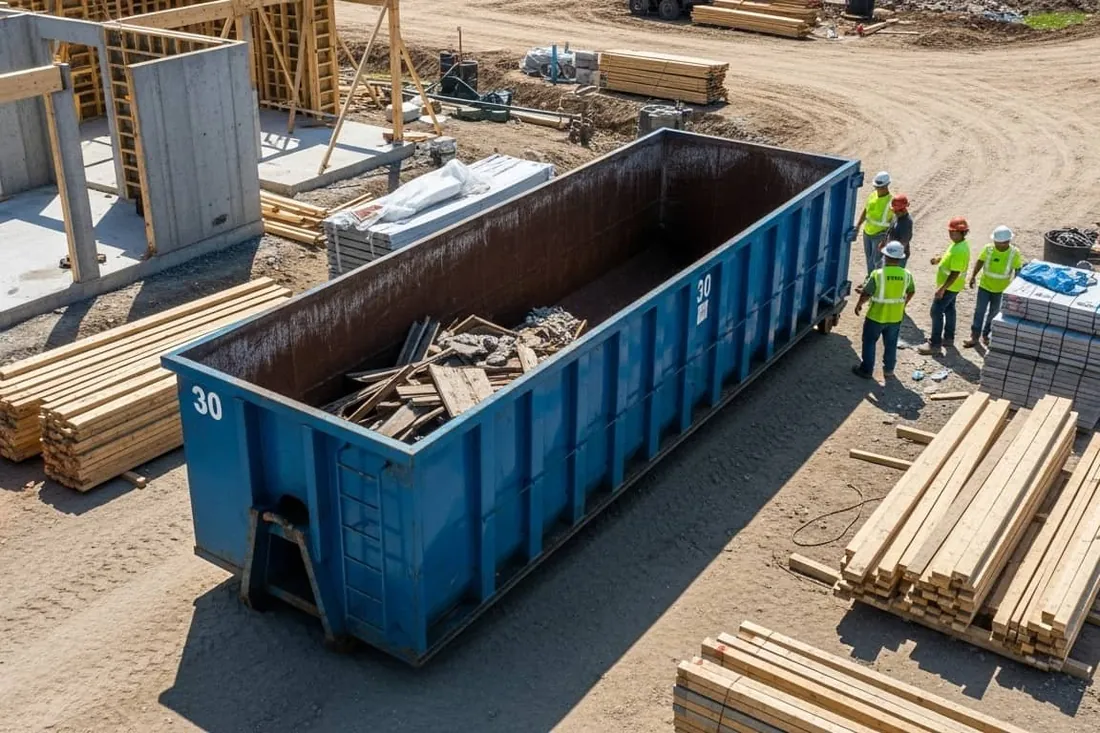
Demolition Debris Dumpsters Holland MI across Holland and Ottawa County
Demolition debris is heavier than it looks and more mixed than anyone plans for. A gut-out that looks like a couple of rooms of drywall turns out to be plaster, lath, three layers of flooring, old tile bedded in mortar and a cast iron tub nobody wants to carry. The material decides the container, and on a teardown the material is rarely what the homeowner described on the phone.
We run demo boxes for remodelers, one-man crews and homeowners doing their own interior work across Holland, the Allegan County townships and out toward the lakeshore. The two questions worth settling before delivery are what the building is made of and how old it is. Get those right and the job runs. Get them wrong and you find out at the scale or, worse, mid-tear-out.
Interior gut-outs and the weight of plaster
This is the number people miss. Plaster and lath is roughly two to three times the weight of the same volume of drywall, because it is sand, lime and horsehair over wood strips rather than gypsum in paper. Older near-downtown Holland homes are full of it, sometimes with a skim coat over the top from a seventies remodel.
Practical effect: a gut-out that would take a 30 yard in a modern house should usually run a 20 yard with a planned swap. You will fill it on weight before volume. Add to that whatever is under the carpet — original hardwood, a layer of vinyl, a layer of tile in mortar bed — and the tonnage climbs faster than the pile.
Winter is when this work happens here. The exterior season shuts down, interior renovation picks up, and a container on the drive through January is entirely normal as long as the approach stays plowed.
Pole barns, sheds and outbuildings
Rural Allegan and the townships around Hamilton and Overisel are full of pole buildings at the end of their life. They come apart into distinct streams and the job goes much better if you keep them apart rather than mixing everything into one box.
- Steel roofing and siding — worth pulling for a scrap recycler rather than burying, and it takes up brutal volume when it is not flattened
- Dimensional lumber, posts and trusses — the bulk of the load; cut to length so it lies flat instead of bridging across the box
- Concrete piers, slab and footings — never in the general container. That goes in a heavy debris box
- Anything stored inside — old chemicals, fuel, pesticide and tires are standard finds in a farm building and none of them can ride in the load
Pre-1980 buildings and asbestos
Say this part plainly. If the building predates about 1980, assume asbestos — see EPA guidance on asbestos — is present until an assessment says otherwise. In this housing stock it shows up in floor tile and the black mastic under it, pipe and boiler wrap, some plaster skim coats, roofing felt, siding shingles and certain textured ceilings.
It has to be assessed by a qualified inspector before demolition, and if it is present it must be abated by a licensed contractor and disposed of separately. It cannot go in our container under any circumstances, and it is not a corner anyone should cut — it is a regulatory issue and a health one. We will happily deliver the box for everything else once abatement is finished.
For the rest, keep the streams sensible: general demo debris in the box, clean concrete separate, metal to a recycler, brush and cleared vegetation to a green load because Michigan keeps yard waste out of landfill.
Sizes
Which container for demolition debris dumpsters?
Every service runs in all four sizes. Match the material to the weight allowance and the rest takes care of itself.
| Size | Dimensions | Capacity | Weight included | Best for |
|---|---|---|---|---|
| 10 Yard Dumpster | 12 ft long × 8 ft wide × 3.5 ft high | about 3 pickup truck loads | 1–2 tons | Small bathroom remodels, single-room cleanouts, concrete and heavy debris, roofing up to about 15 squares. |
| 15 Yard Dumpster | 16 ft long × 8 ft wide × 4 ft high | about 4–5 pickup truck loads | 2–3 tons | Garage and basement cleanouts, kitchen remodels, medium roof tear-offs, small deck removals. |
| 20 Yard Dumpster | 22 ft long × 8 ft wide × 4.5 ft high | about 6 pickup truck loads | 3–4 tons | Whole-home decluttering, flooring and siding jobs, large tear-offs, drywall and mud phases. |
| 30 Yard Dumpster | 22 ft long × 8 ft wide × 6 ft high | about 9 pickup truck loads | 4–5 tons | Full-house renovations, new construction, estate clearances, commercial fit-outs and demolition. |
| 40 Yard Dumpster | 22 ft long × 8 ft wide × 8 ft high | about 12 pickup truck loads | 5–6 tons | Large commercial fit-outs, industrial clear-outs, major renovations and high-volume light debris. |
Talk to a real person
Need demolition debris dumpsters in Holland?
Call (616) 499-6026 and describe the job. You will get a flat price and a delivery time on the same call — most orders before noon go out the same day.
Mon–Sat 7:00am – 6:00pm · Sun by appointment
Answers
Demolition Debris Dumpsters — your questions
What size dumpster for a full interior gut of one floor?
Usually a 20 yard with a planned swap rather than a single 30, especially in an older home. Plaster and lath weighs roughly two to three times what the same volume of drywall does, so you reach the tonnage allowance long before the box looks full. Newer construction with drywall throughout can often go straight to a 30.
Do I need an asbestos inspection before demolition?
If the building predates roughly 1980, assume yes. Floor tile, mastic, pipe and boiler wrap, some plaster coats, roofing felt and siding shingles are all common sources in this housing stock. It needs a qualified assessment first, licensed abatement if present, and separate disposal. It cannot go into a general demolition container under any circumstances.
Can concrete footings go in with the rest of the demolition debris?
No, keep them separate. Concrete, block and brick are dense enough to blow through a mixed-debris tonnage allowance on their own, and clean concrete has recovery value when it is not contaminated with wood and drywall. Put it in a dedicated heavy debris container, which is normally a 10 yard filled only to the marked line.
Can you take a pole barn teardown?
Yes, and it usually takes more than one container. Pull the steel roofing and siding for a scrap recycler, keep concrete piers and slab out of the general box, and cut lumber and trusses to length so they lie flat instead of bridging across the container. Old fuel, chemicals and tires stored inside need separate disposal.
Is winter a bad time for an interior demolition project?
It is the best time, and it is when most of this work happens in Michigan. Exterior trades slow down, crews have availability, and the debris is all coming from inside anyway. What we need from you is a plowed approach and a placement that does not become a snow pile. Keep the container reachable and the schedule holds.
Service area
Demolition Debris Dumpsters across the Lakeshore
We run roll-off dumpsters out of our 460 Cleveland Ave yard across Ottawa County and Allegan County — from the cottage lanes at Macatawa and Saugatuck to the farm drives around Overisel and Hamilton, and north up US-31 as far as Grand Haven. If your town is not on this list, call us anyway. We probably still get there.