
Home Cleanout Checklist Holland MI: Room-by-Room Plan
A room-by-room whole-home cleanout plan built for Holland, Michigan homes, from the damp basement and the pole barn to sizing, timelines and loading order.
ReadHolland, MI guide
Driveway damage from a roll-off happens in two moments, not two weeks. How the load works, what boards prevent, and the best season to book in West Michigan.

Almost every driveway complaint we hear about along the Lakeshore traces back to roughly ninety seconds of work. Not the week the container sat in place. Not the twenty trips out to it with torn-out carpet, lath and plaster, or shingles. The delivery, and the pick-up. Those are the two moments when weight concentrates, when steel moves against your surface, and when a driveway already tired from a West Michigan winter finally shows what it has been hiding.
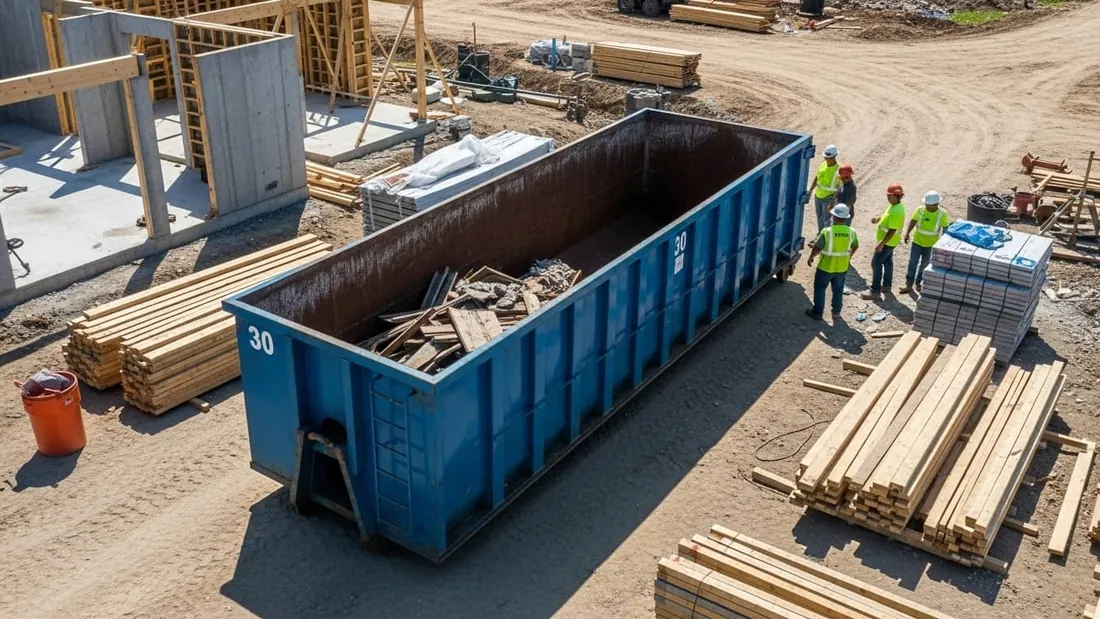
That distinction changes what you should actually worry about. Homeowners usually picture a loaded 30 yard box pressing down on their concrete for six straight days and slowly crushing it. In practice a container sitting still is fairly benign. Its weight spreads along two long steel rails that run most of the length of the box, and a full container distributes across far more surface area than people expect. The truck is a different animal entirely. A roll-off truck carries the great majority of its weight on the rear axles, and when it backs up your drive that mass rides over a strip a few feet wide, twice, in and out.
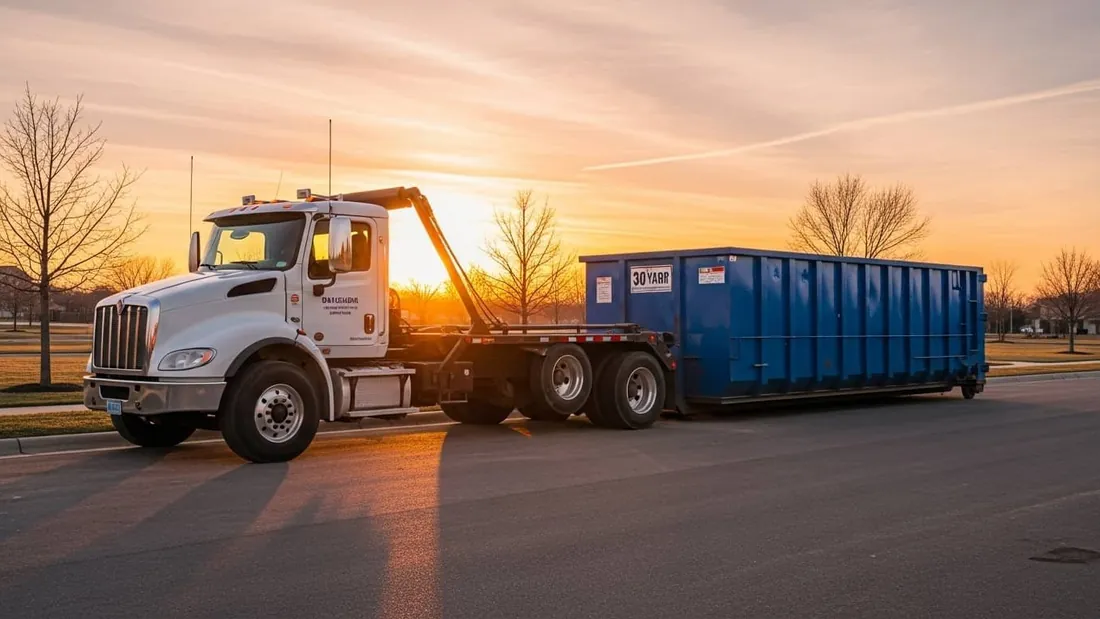
Then comes the part that does the real work. As the hoist raises and the box tips off the rails, the rear rollers on the container touch down first. For several seconds an enormous load is standing on four small contact points, and those points are not static: the box rolls and drags backward as it comes off, and it drags forward again when the winch cable pulls it up on pick-up. Point load plus movement is the recipe for gouges, scuffs and cracked edges. Everything worth doing to protect a driveway is aimed at those seconds.
Three forces are at play. First, axle load, which is the truck itself and anything already in the box. Second, point load, which is the container's rollers and rail ends concentrating that weight into contact patches roughly the size of your hand. Third, shear, which is the horizontal dragging motion as the box moves along the surface rather than simply sitting on it. Asphalt handles steady vertical pressure reasonably well and handles shear on a hot afternoon very badly. Concrete handles both well until you put the load over a joint, an edge, or a thin apron poured with no real base underneath it.
This is also why the honest answer to "will you damage my driveway?" is neither yes nor no. A careful hauler, boards laid down before anything touches the surface, and a well-chosen spot together mean damage is uncommon. But nobody can promise that a surface which is already cracked, spalling or lifting will survive a heavy vehicle. If freeze-thaw has been working water into your asphalt for eight winters, the failure was already written. A truck just picks the date.
Boards. That is the short version. Two-inch planks or good sheets of plywood laid under the rails and along the roller path, positioned before the container touches the surface, spread a concentrated point load across a much wider area and give the rollers something to bite that is not your driveway. We put boards down under the rails on every driveway placement as standard. It is not a line item, not an upsell, and we do not wait to be asked.
The second thing that works is a driver who gets out and walks the spot first. Slope, soft shoulders, a sunken section, a drain cover, a septic lid, an irrigation head sitting proud of the grass, a low limb, an overhead service drop running from the pole to the house — all of that is visible in a thirty-second walk and invisible from a mirror. Setting the box square to the drive matters too. A container placed at an angle loads one rail harder than the other and is far more likely to drag sideways on pick-up.
Then there is placement discipline: stay off the apron where the drive meets the street, stay clear of expansion joints where the layout allows, never sit on a drain cover or utility lid, and never straddle the edge of a slab. Edges are unsupported. That is where concrete breaks. Our crews go through this on every residential dumpster rental, and it is the most common reason we ask a homeowner to move a car before we back in.
Asphalt is the most common driveway around here and the most temperature-dependent. On a 90-degree July afternoon the binder softens and roller marks press in easily; the same asphalt in October is firm and forgiving. Asphalt that has been through several freeze-thaw cycles without sealing will show hairline cracking and alligatoring, and those areas are weaker whatever anyone puts under the rails.
Poured concrete is the strongest surface we set on, but it has specific weak points: control and expansion joints, thin aprons, and any slab poured over a sand base that has since washed or settled. A void under concrete is invisible until something heavy finds it.
Pavers, stamped and decorative concrete carry the highest risk relative to their replacement cost. Pavers shift under point load, and stamped surfaces scuff in ways that cannot be patched invisibly. We will usually recommend placing somewhere else.
Gravel and long unpaved rural drives, the kind common around Hamilton, Overisel and Fennville, hold a loaded truck well in dry weather. In April, with saturated subgrade underneath, the same drive ruts badly, and those ruts channel water for the rest of the year.
| Surface | Risk level | Recommended precaution |
|---|---|---|
| Poured concrete, sound | Low | Boards under rails and rollers; keep off joints, edges and the apron |
| Asphalt, well maintained | Low to moderate | Boards, plus a morning placement in summer heat |
| Asphalt, cracked or spalling | Moderate to high | Boards, a smaller container, or move the placement off the drive |
| Concrete with settling or hollow spots | High | Choose an alternate location; do not load the suspect slab |
| Pavers, stamped or decorative | Highest | Place elsewhere by default; boards are not sufficient insurance |
| Gravel or unpaved, dry season | Low | Firm level pad, boards for the rollers, re-rake any disturbance |
| Gravel or unpaved, spring thaw | High (rutting) | Wait for dry conditions or set at the road end of the drive |
Frozen ground is genuinely firm, and winter can be a good time to set a container. Two conditions apply. The placement area has to be cleared of snow before the truck arrives, because we cannot set on what we cannot see. And both sides should accept that ice hides existing damage. Clear it, look at it together, agree on the spot.
The worst window of the year, and it is not close. Frost is coming out of the ground unevenly, subgrade is saturated, and a surface that carried weight fine in January now flexes underneath. It is also the reason counties and MDOT post seasonal frost-law weight restrictions across roughly March into May, which can affect loads and routing. If a project can shift two or three weeks later, shift it.
Heat is the variable. Ask for a morning delivery and a morning pick-up if your drive is asphalt; the gap between 8am and 3pm surface temperature is the gap between a mark and no mark. Sandy dune subgrade around Macatawa, Park Township, Saugatuck and Douglas drains fast and behaves better in a wet spell than the heavier clay inland.
The best conditions of the year. Dry settled ground, firm asphalt, no weight restrictions. If you have a big tear-off or a cleanout you can time, schedule it here.
None of this is a hassle for us. Tell us on the phone and we plan around it. A surprise at the curb is what causes problems.
Sometimes the honest recommendation is to put the box somewhere else. A gravel pad, a firm side yard, the grass strip beside the drive, or the street where local rules allow it — street placement usually means checking whether a permit is needed first, which we walk through in our Holland dumpster permit guide. A smaller container is a real option too, not a consolation prize. A 10 yard box is shorter, lighter and spreads considerably less load than a 30, and for dense material it is usually the right call anyway.
The heaviest debris streams put the most stress on any surface. Concrete, brick, dirt, sod, plaster and shingles are dense enough that a half-filled container outweighs a fully loaded box of household junk. That is why we route concrete and heavy debris into smaller boxes, and why a roofing tear-off rarely needs the largest container on the truck. Less weight sitting over your driveway is a protection measure in its own right.
If you are not sure what your surface can take, call and describe it. We will tell you plainly whether we would set on it, what we would put down first, and what we would suggest instead. EAD Dumpster Rentals is locally owned, licensed and insured, and priced flat-rate, and you can read how the team works on our about page. To book a delivery or talk a placement through with someone who has set boxes on driveways from Zeeland to Grand Haven, call (616) 499-6026, or reach us through the contact page.
Talk to a real person
Call and describe the job. Flat price, stated tonnage, and a delivery time on the same call.
Mon–Sat 7:00am – 6:00pm · Sun by appointment
From this guide
Sound poured concrete handles a roll-off well. The risk sits at control joints, unsupported slab edges, thin aprons, and any spot where the base underneath has settled and left a void. With planks under the rails and rollers and the box set square and away from edges, cracking is uncommon. Concrete that is already spalling or lifting is a different conversation, and we will say so before we set.
Yes, on every driveway placement, as standard. Planks or plywood go under the rails and along the roller path before the container ever touches the surface. It is not an add-on charge and you do not have to ask for it. If you want extra protection over one particular section, mention it on the phone and the driver will bring more material for that spot.
Spring thaw. Frost leaves the ground unevenly, subgrade is saturated, and surfaces flex under weight they carried without complaint in January. It is also when seasonal frost-law weight restrictions are posted, roughly March into May. Autumn gives the best conditions of the year: dry settled ground, firm asphalt, and no weight restrictions to work around.
Often yes, depending on the street and the local rules. Street placement usually means checking whether a permit is required and whether road width and parking allow it. Call with the address and we will talk it through. A firm side yard, a gravel pad, or the grass beside the drive are also common alternatives when a decorative surface is involved.
It does, mostly through weight. A smaller container is shorter, lighter and spreads less load, and for dense material like concrete, dirt, plaster or shingles it is usually the correct choice regardless. A half-filled box of heavy debris can outweigh a full box of household junk, so matching the container to the material protects the surface and the budget.
Keep reading
A room-by-room whole-home cleanout plan built for Holland, Michigan homes, from the damp basement and the pole barn to sizing, timelines and loading order.
ReadWhat really happens to a roll-off load after pickup in Holland, Michigan, plus how to sort concrete, metal, green waste and banned items to cut disposal costs.
ReadA practical Holland, Michigan guide to picking between 10, 15, 20, 30 and 40 yard roll-offs, covering real dimensions, tonnage limits and when bigger is wrong.
Read