

Dumpster Rental Cost in Holland MI: An Honest Breakdown
A Holland roll-off operator explains what drives dumpster pricing, which add-on fees to ask about, and why weight, not volume, usually decides your final bill.
ReadHolland, MI guide
A practical Holland, Michigan guide to picking between 10, 15, 20, 30 and 40 yard roll-offs, covering real dimensions, tonnage limits and when bigger is wrong.
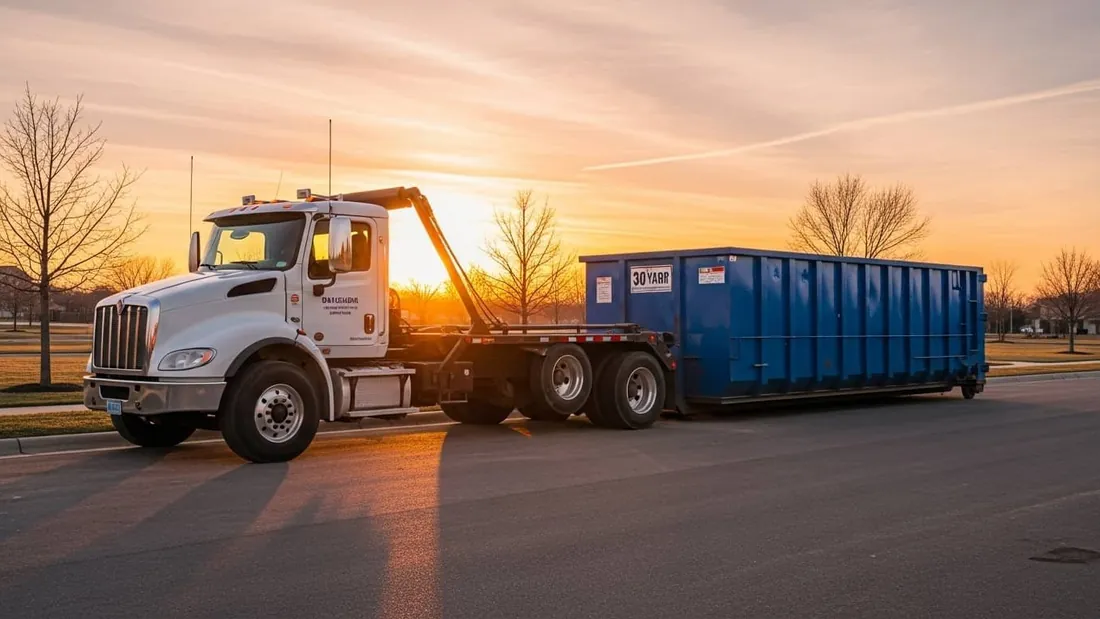
Most sizing calls start the same way. Somebody is standing in a driveway off Washington Ave, or out on Butternut, looking at a pile that does not exist yet and trying to guess how big it will be. Worth getting right, because both ways of getting it wrong cost money. Too small and you pay for a second haul on a job that should have been one. Too big and you either rent air or — far more common — fill a big box with heavy material and sail past the weight allowance.
Here is the thing nobody explains up front: a roll-off has two separate limits, and whichever one you hit first ends the rental. There is the cubic-yard capacity, which is just space, and there is the tonnage allowance included in the flat rate, which is weight. Bulky-but-light debris — cabinets, drywall, decking, furniture, brush — runs out of room long before it runs out of pounds. Dense debris — concrete, dirt, shingles, plaster, soaked carpet — buries the scale with the box only half full. Nearly every sizing mistake we see is somebody applying bulky-material logic to dense material.
Then there is West Michigan itself. Between roughly March and May, county road commissions post seasonal weight restrictions — frost laws — while the ground thaws from the top down and posted roads go soft. A loaded truck that is legal in August may not be legal on the same road in April, which sometimes means splitting a heavy job across two lighter pulls. Add freeze-thaw cycles that leave concrete aprons brittle and the sandy dune soil near the lakeshore, and the box you choose is only half the decision.
Dimensions vary a little by manufacturer, but our fleet runs close to these. Tonnage figures are typical allowances included in a flat rate — confirm yours when you book, since it moves with the material and the disposal site.
| Size | Approx. dimensions (L x W x H) | Capacity | Pickup loads | Typical weight allowance | Best for |
|---|---|---|---|---|---|
| 10 yard | 12 ft x 8 ft x 3.5 ft | 10 cu yd | 3-4 | 1-2 tons | Concrete, dirt, brick, one small room |
| 15 yard | 16 ft x 7.5 ft x 4 ft | 15 cu yd | 5 | 2-3 tons | Single-room remodels, small tear-offs, tight driveways |
| 20 yard | 22 ft x 8 ft x 4.5 ft | 20 cu yd | 7 | 3-4 tons | Roofs, garage and attic cleanouts, kitchens |
| 30 yard | 22 ft x 8 ft x 6 ft | 30 cu yd | 10 | 4-5 tons | Whole-house renovations, build-outs, big cleanouts |
| 40 yard | 22 ft x 8 ft x 8 ft | 40 cu yd | 13-14 | 5-6 tons | Bulky light debris only — never anything dense |
Pickup-load figures assume a full-size half-ton with an 8-foot bed, loaded heaped rather than level. Hauling in a mid-size truck? Roughly double the trips. A 10 yard roll-off is not a small dumpster in any meaningful sense — it is three or four truckloads, and it looks enormous the first time it lands in a residential driveway.
Notice that the 20 yard, 30 and 40 share a footprint. From the 20 up you are buying height, not floor. A 30 yard container takes no more driveway than a 20 — but loading over a 6-foot wall by hand is a different job than loading over a 4.5-foot wall.
Ballpark densities, loose in the box: broken concrete and asphalt run roughly 1.2 to 1.5 tons per cubic yard. Clean fill dirt is about a ton per yard dry, closer to a ton and a half after a week of Lakeshore rain. Asphalt shingles come in near 250 lb per square for one layer of three-tab and 350 to 400 lb for architectural. Old plaster and lath — what you find in a lot of near-downtown Holland houses built before the war — is far heavier than the drywall people mentally substitute for it. Carpet and pad that sat in a wet basement can weigh three times what it did dry.
Run the numbers first. Fill a 10 yard level with broken concrete and you are at 8 to 10 tons, which is why heavy debris loads get a marked fill line and a strict "no higher than this" rule. Fill a 20 yard with plaster from a full gut and 6 tons is realistic. Overage is billed per ton beyond the allowance, so the box you picked because it was big becomes the most expensive line on the job. Ask for the flat rate and the per-ton figure together, and read our breakdown of what a dumpster costs in Holland before you commit.
Any of those on their own belongs in a 10 or a 15. Mixed into general demo debris, they still drag the tonnage up enough to change your answer.
A 12 x 14 bedroom or a modest bath: drywall, trim, a vanity, flooring, some framing. That is 10 to 13 cubic yards of loose debris and maybe a ton and a half. A 15 yard gives you honest margin. Add a cast-iron tub or a mortar-bed tile floor and check the weight math again before you go bigger.
A 2,000 sq ft ranch is about 22 to 25 squares. One layer of architectural shingles at 375 lb per square is roughly 4.5 tons — a 20 yard on volume, but already at the top of the allowance on weight. Two layers is 9 tons, and the right answer becomes two smaller pulls, not one bigger box. Our roofing tear-off service exists partly to keep people out of that trap.
Decades of boxes, a dead treadmill, lawn furniture, the bikes nobody rode. Bulky, light, awkward. A 20 yard swallows a two-stall garage plus an attic with room to spare, and the 4.5-foot walls stay liftable. Pull the returnables first — Michigan's 10-cent deposit adds up out of a garage.
Gutting an 1,800 sq ft house to the studs generates 25 to 35 cubic yards. One 30 does it if the walls are drywall. If it is a 1920s place near Centennial Park with plaster and lath throughout, split it: a 15 for the plaster, then a 30 for everything else. Cheaper and legal, versus one overweight 30 that costs more than both.
Tearing out a retail suite or an office along River Ave — ceiling grid, carpet tile, metal studs, millwork — is bulky and light, exactly what the taller box is for. If the schedule is tight, we swap a full one for an empty one same day.
Seasonal turnovers around Macatawa, Park Township, Saugatuck and Douglas produce enormous volume and very little weight: wicker, mattresses, mildewed rugs, forty years of deck furniture. Volume-driven, so size up. Watch the placement instead — sandy soil and steep two-tracks are the real problem, not the box.
The standard advice is right most of the time. The gap between adjacent sizes is far smaller than the cost of a second delivery, and people underestimate their own debris almost universally. Light and bulky? Take the bigger box.
That logic reverses completely with dense material. A bigger container does not raise your tonnage allowance much — it just gives you more room to bury yourself. On concrete, dirt, shingles or plaster, take the smaller box and take two of them, so the walls become the limit that keeps you legal. A 40 yard container is a volume box, period: right for a warehouse full of packaging, almost never right for anything heavy. We will say so on the phone rather than deliver something you cannot legally fill.
Plan on the container's length plus about 5 feet, and 10 to 12 feet of width for the truck's wheels and mirrors. The rear barn doors need 4 to 6 feet of clear swing — if you want to walk debris in rather than heave it over the rail, that space is not optional. The truck needs roughly 60 feet of straight approach and about 23 feet of overhead clearance to raise the hoist, which rules out spots under low maples or service drops.
On concrete and asphalt drives we lay plywood or 2x10s under the rollers as standard, not on request. Holland driveways take a beating from freeze-thaw, and a hairline crack in March becomes a spall in June — our driveway protection guide covers the rest. If the only workable spot is the street, that is a right-of-way question, and rules vary by municipality across our West Michigan service area; confirm with the City of Holland or your township before delivery day.
Still unsure? Two minutes on the phone settles it. Tell us the address, the material and roughly what the pile will look like, and we will name a size, a flat rate and a delivery window — often same day. Call EAD Dumpster Rentals at (616) 499-6026. Locally owned, licensed and insured, and we would rather talk you into the right box than deliver the wrong one twice. For state disposal rules, Michigan EGLE is the authority.
Talk to a real person
Call and describe the job. Flat price, stated tonnage, and a delivery time on the same call.
Mon–Sat 7:00am – 6:00pm · Sun by appointment
From this guide
A 15 yard handles most single-room remodels. A 12 by 14 bedroom or an average bathroom produces roughly 10 to 13 cubic yards of drywall, trim, flooring and fixtures, which lands comfortably inside a 15 with margin left over. If the room includes a cast-iron tub, mortar-bed tile or plaster walls, recheck the weight before sizing up, because those materials can push you past the tonnage allowance.
About seven, assuming a full-size truck with an eight-foot bed loaded heaped rather than level. A smaller mid-size pickup holds closer to a yard and a half, so the same 20 yard container replaces twelve or thirteen of those trips. Most people underestimate this badly, which is why one delivered roll-off usually beats a weekend of hauling to the transfer station yourself.
Weight, not space. Broken concrete runs roughly 1.2 to 1.5 tons per cubic yard, so even ten yards of it approaches eight to ten tons. Filling a larger box would exceed both the container's rating and legal axle weights for the truck. Heavy material goes in a 10 or 15 yard with a marked fill line, and if you have more than that, we bring a second box.
They can. Roughly March through May, county road commissions post seasonal weight restrictions while the ground thaws, limiting how heavy a loaded truck may run on posted roads. That rarely stops a job, but it can mean two lighter pulls instead of one heavy one, or a slightly different pickup schedule. Mention your timeline when booking and confirm current postings with the county road commission.
Plan on the container's length plus about five feet, and ten to twelve feet of width for the truck's wheels and mirrors. Add four to six feet behind the rear barn doors so they can swing open. The truck needs roughly sixty feet of straight approach and twenty-three feet of overhead clearance to raise the hoist, so avoid spots beneath low branches or service lines.
Keep reading
A Holland roll-off operator explains what drives dumpster pricing, which add-on fees to ask about, and why weight, not volume, usually decides your final bill.
ReadA Holland operator's plain guide to what belongs in a Michigan roll-off, what never does, and the grey-area items worth a phone call before you load.
ReadWhen a dumpster needs a permit in Holland, how to find the right municipality, what HOA rules add, and why Michigan frost laws reshape spring project scheduling.
Read