
Dumpster Permit in Holland, MI: What You Need to Know
When a dumpster needs a permit in Holland, how to find the right municipality, what HOA rules add, and why Michigan frost laws reshape spring project scheduling.
ReadHolland, MI guide
A Holland operator's plain guide to what belongs in a Michigan roll-off, what never does, and the grey-area items worth a phone call before you load.

Most of the calls we take at EAD Dumpster Rentals aren't about size or price. They're some version of "can I throw this in?" It's a fair question. A roll-off looks like it will swallow anything, and for roughly ninety percent of what comes out of a Holland house or job site, it will. The other ten percent is where people get burned — a half-full can of deck stain buried under drywall, a propane bottle rolled in with the brush pile, an old fridge that still has refrigerant sitting in the coils. That is the stuff that turns a routine haul into a headache for everybody.
Here is the part worth reading twice: one prohibited item can get an entire load rejected. Not the item — the load. The tipping floor does not sort your container for you. If a spotter catches a car battery or a five-gallon pail of used oil coming off the truck, the whole box gets flagged, and it comes back to your driveway with everything still in it. You pay for the trip out, the trip back, the contamination handling, and then you pay again to have the material hauled properly once the offending item is pulled. We have watched it happen to careful, well-meaning people who simply did not know.
Michigan also has a handful of rules that trip up folks who have rented containers in other states. Yard waste is banned from Michigan landfills. Returnable bottles and cans carry the ten-cent deposit, which means burying them under a sectional is throwing money in a hole. And a lot of the housing stock near downtown Holland, out through Graafschap, and along the older lakeshore streets predates 1980 — which puts asbestos on the table before you swing the first hammer. This guide covers all of it: what goes in without a second thought, what never goes in and why, and the grey-area items that earn a phone call first.
The bulk of what we haul across Ottawa and northern Allegan County is ordinary, non-hazardous solid waste. If it is dry, solid, and not on the banned list further down, it almost certainly belongs in the box.
Couches, mattresses in most cases, dressers, carpet and pad, clothing, toys, books, boxed clutter, broken plastic patio furniture, garage shelving. Basement and attic cleanouts are the bread and butter of residential dumpster rental here, and a typical three-bedroom purge fits a 10-yard container or a 15 without much strain.
Washers, dryers, dishwashers, ranges, ovens, microwaves, hot water heaters and furnaces go in fine. Anything with a sealed refrigerant system does not — more on that below.
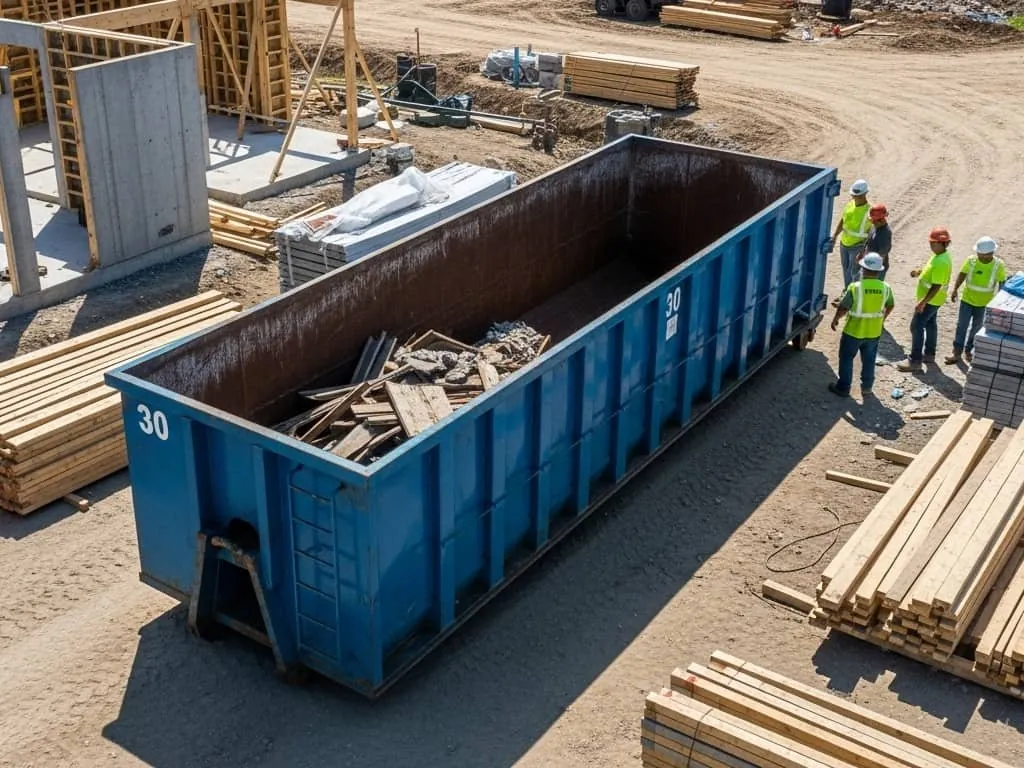
Framing timber, plywood and OSB, drywall, trim, subfloor, laminate and hardwood flooring, tile, kitchen cabinetry, countertops, siding, insulation, windows, doors, shingles and underlayment. Roofing tear-offs and remodel debris are routine work on our construction dumpsters, though heavy shingle loads and dense material change which size makes sense — the size guide walks through it.
Branches, brush, leaves, sod, hedge trimmings and garden clearings are all fine — in a dedicated green waste container. Not mixed with the kitchen demo. Michigan law is the reason, and it is not negotiable.
Every item below is banned for a concrete reason, not because somebody in an office decided to be difficult.
Michigan bans yard clippings from landfill disposal, so green material has to go to a composting facility. That only works if the load is genuinely clean. One bag of drywall scrap or a length of PVC in a brush load and the compost site turns it away — at which point it becomes mixed waste and gets priced like it. Keep the green load green. If you are clearing a lot and gutting a house in the same week, that is two containers, and the arithmetic still comes out ahead.
Michigan's bottle deposit is a dime a container. On a garage or estate cleanout in Zeeland or Park Township, the returnables stashed in a corner are often worth real money — a few hundred cans is thirty or forty dollars that should not ride to the landfill. Sort them into a bin before the box arrives. Our estate cleanout checklist makes that a first-day task.
Screens and computer equipment need a dedicated recycler. Set them aside at the start of the job rather than discovering a CRT television at the bottom of a full container. The Holland recycling and disposal guide covers where the categories go locally.
A good share of Holland's near-downtown housing was built well before 1980, and the same is true of the older cottages around Lake Macatawa and Saugatuck. Plaster-and-lath walls, textured ceiling coatings, vinyl floor tile and its black mastic, pipe and duct wrap, some window glazing and cement board siding can all contain asbestos. Get a licensed inspector to sample before a full gut-out. It costs a fraction of what a contaminated load costs, and it protects whoever is swinging the sledge. Michigan EGLE publishes the state's asbestos program requirements.
These are not banned outright, but they change the disposal path or the weight, so we want to know in advance rather than at the gate.
| Item | Status | What to do |
|---|---|---|
| General household junk, furniture, carpet | Allowed | Load it |
| Timber, drywall, flooring, cabinetry, roofing | Allowed | Watch the weight on shingles |
| Non-refrigerant appliances | Allowed | Load it |
| Clean yard waste | Allowed, separate load | Book a dedicated green container |
| Empty, fully dried paint tins | Allowed | Lids off, residue hard |
| Liquid paint, solvents, fuel, oil, chemicals | Prohibited | Household hazardous waste drop-off |
| Batteries, tyres, propane and cylinders | Prohibited | Retailer or scrap takeback |
| Fridges, freezers, AC units, dehumidifiers | Prohibited | Certified refrigerant recovery first |
| TVs, monitors, computers | Prohibited | E-waste recycler |
| Asbestos-containing material | Prohibited | Licensed abatement contractor |
| Hot or recent ashes | Prohibited | Wet down, wait a week |
| Mattresses and box springs | Call first | Often fine, sometimes a surcharge |
| Treated timber, sleepers, decking | Call first | Depends on volume and treatment |
| Concrete, brick, block, dirt, stone | Call first | Needs a heavy-debris container |
| Large stumps and root balls | Call first | Size and count matter |
Concrete and masonry deserve their own note. A 20-yard box filled with slab will exceed what a truck can legally carry on M-40 long before it looks full. That is why we run a dedicated heavy debris container for driveway tear-outs, patios and foundation work — smaller box, correct pricing, no overweight surprise.
Best case, the driver spots it in the driveway, you pull the item, and we roll. Worse case, it is caught at the facility: the load is refused, the box comes back full, and a contamination charge lands on top of the wasted haul. Worst case is a fire, and then it stops being about money. The facilities set these rules and we live by them the same as you do.
The crews that never have an issue all do the same handful of things. Do a hazardous sweep of the garage, the shed and the basement shelf before the container lands, and stage anything questionable in one spot. Put a bin out for returnables. Keep a pallet or a corner of the drive for metal — appliances, pipe, radiators, wire — because scrap is worth money and takes up space you are paying for. If yard work is part of the job, book the green load separately from day one. And when you genuinely are not sure about something, ask. A thirty-second phone call is cheaper than a rejected container every single time.
We deliver same-day across Holland, Zeeland, Hudsonville, Jenison, Grand Haven, Saugatuck and the rest of the Lakeshore, with flat-rate pricing and driveway-safe placement. Not sure whether your load qualifies? Check the FAQ or just call the yard — (616) 499-6026 — and tell us what is going in. We will tell you straight, and get a box to you.
Talk to a real person
Call and describe the job. Flat price, stated tonnage, and a delivery time on the same call.
Mon–Sat 7:00am – 6:00pm · Sun by appointment
From this guide
Liquid paint is prohibited because it leaks, contaminates other material and is flammable. Empty cans are treated differently: leave the lid off until the residue is completely dry and hard, and the can becomes ordinary solid waste you can load without concern. Larger volumes of usable or wet paint should go to a household hazardous waste collection instead.
Disposal facilities inspect incoming loads and do not sort them for you. When a spotter finds a battery, a propane bottle or a pail of oil, the entire container is refused rather than the single item. The box comes back to your property still full, and you face a wasted haul, a contamination charge, and a second disposal cost once the item is removed.
No. Michigan bans yard waste from landfills, so green material goes to a composting facility that will only accept clean loads. A single piece of drywall, plastic or metal contaminates the batch and it gets reclassified as mixed waste at mixed-waste pricing. Book a separate container for brush, leaves, sod and trimmings from the start.
Washers, dryers, dishwashers, stoves, water heaters and furnaces are fine in a standard container. Anything containing refrigerant is not - refrigerators, freezers, window air conditioners, dehumidifiers and mini-fridges all need certified refrigerant recovery before the shell can be scrapped. Set those aside and arrange proper handling rather than dropping them in the box.
If the house predates 1980, yes, have a licensed inspector sample first. Plaster and lath assemblies, vinyl floor tile and mastic, pipe and duct wrap, textured ceilings and some siding can all contain asbestos. Testing costs a fraction of a contaminated load or an abatement violation, and it protects everyone working on the demolition.
Keep reading
When a dumpster needs a permit in Holland, how to find the right municipality, what HOA rules add, and why Michigan frost laws reshape spring project scheduling.
ReadRoll-off containers run all winter on the Lakeshore. What changes in snow and ice, why frozen ground helps, and how to plan around the spring thaw.
ReadA West Michigan contractor's guide to sizing, sequencing and loading construction debris containers by build phase so you stop paying for air or blowing tonnage.
Read